
 By
By 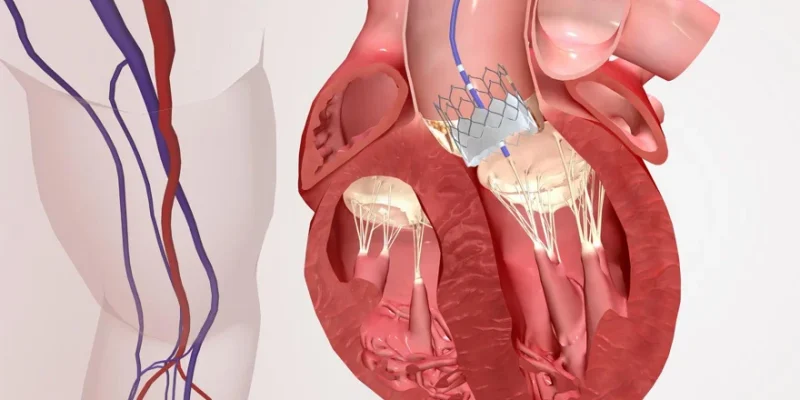
When a patient is diagnosed with mitral stenosis, the next question is often about treatment. Some patients are advised medicines and monitoring. Others may be told that they need a procedure to open the narrowed valve or surgery to repair or replace it. Two treatment options that may come up during discussion are balloon mitral valvuloplasty and heart surgery.
Both treatments are used for mitral valve disease, but they are not the same. The right option depends on the severity of the valve narrowing, the structure of the valve, the amount of leakage, the presence of clots, other heart conditions, and the patient’s overall health. Understanding the difference can help patients ask better questions during consultation.
Understanding Mitral Stenosis
The mitral valve is located between the left atrium and the left ventricle, two chambers on the left side of the heart. It allows blood to flow forward from the upper chamber to the lower chamber. In mitral stenosis, this valve becomes narrow and does not open fully.
Because of the narrowing, blood flow through the valve becomes restricted. Pressure can build up in the left atrium and lungs. This may cause breathlessness, tiredness, palpitations, swelling in the feet, chest discomfort, or difficulty lying flat. In some patients, mitral stenosis also leads to atrial fibrillation, an irregular heart rhythm that can increase the risk of blood clots.
A common cause of mitral stenosis is rheumatic heart disease, which can damage the valve over many years.
What Is Balloon Mitral Valvuloplasty?
Balloon mitral valvuloplasty is a minimally invasive procedure used to widen a narrowed mitral valve. It is also called balloon mitral valvotomy.
During the procedure, a thin tube called a catheter is inserted through a blood vessel, usually in the groin. The catheter is guided to the heart. A special balloon is placed across the narrowed mitral valve and inflated carefully. This helps separate the fused valve leaflets and increases the valve opening.
The procedure does not require opening the chest. Because of this, recovery is often faster than with open heart surgery. It may be suitable for patients whose mitral valve is narrowed but still has a favorable structure.
What Is Heart Surgery for Mitral Valve Disease?
Heart surgery for mitral valve disease may involve mitral valve repair or mitral valve replacement. In mitral valve repair, the surgeon tries to correct the patient’s own valve. In mitral valve replacement, the damaged valve is removed and replaced with an artificial valve.
Surgery may be done through traditional open heart surgery or, in selected cases, through less invasive surgical approaches. The choice depends on the patient’s condition, the hospital’s facilities, and the surgeon’s assessment.
Heart surgery is usually considered when the valve is too damaged for balloon treatment, when there is severe leakage, when there is heavy calcification, or when other heart problems need to be treated at the same time.
Key Difference 1: How the Valve Is Treated
Balloon mitral valvuloplasty works by widening the existing valve. It is most useful when the main problem is fusion of the valve leaflets. The balloon separates the fused areas and improves the valve opening.
Surgery can repair or replace the valve. This makes it more suitable when the valve is badly damaged, severely calcified, or leaking significantly. If the valve cannot function well even after opening, surgery may be the better option.
Key Difference 2: Invasiveness and Recovery
Balloon mitral valvuloplasty is performed through a catheter. Since the chest is not opened, patients may have a shorter hospital stay and quicker recovery, depending on their health and the result of the procedure.
Heart surgery is usually more invasive. It may require general anesthesia, a longer hospital stay, and a longer recovery period. Patients may need more time before returning to normal activities. However, surgery may provide a more appropriate and durable solution when the valve disease is advanced or complex.
The less invasive nature of balloon treatment does not automatically make it the right choice for every patient. Suitability matters more than convenience.
Key Difference 3: Patient Selection
Balloon mitral valvuloplasty is usually considered for patients with significant mitral stenosis, suitable valve anatomy, and no major mitral valve leakage. The valve should not be heavily calcified, and there should not be a clot in the left atrium.
Doctors often perform detailed echocardiography to assess the valve. In some cases, a transesophageal echocardiogram is needed to check for clots and study the valve more clearly.
Surgery may be advised if the valve anatomy is not suitable for balloon treatment. It may also be recommended if the patient has severe mitral regurgitation, disease of other valves, coronary artery disease requiring bypass surgery, or other conditions that need surgical correction.
Key Difference 4: Risks and Limitations
Every heart procedure has risks. Balloon mitral valvuloplasty may involve risks such as bleeding from the puncture site, rhythm problems, stroke, damage to heart structures, or worsening of mitral valve leakage. In rare cases, emergency surgery may be needed.
Heart surgery has its own risks, including bleeding, infection, rhythm problems, stroke, complications related to anesthesia, and risks linked to artificial valves if replacement is performed. Patients with mechanical valves may need lifelong blood thinner medicines. Patients with tissue valves may face the possibility of valve degeneration over time.
The doctor will explain the risks based on the patient’s age, symptoms, test results, and overall medical condition.
Key Difference 5: Long-Term Follow-Up
After balloon mitral valvuloplasty, patients still need regular follow-up. The valve can narrow again in some cases, especially over many years. Medicines may still be needed for rhythm problems, blood clot prevention, or other heart conditions.
After surgery, follow-up is also essential. If a valve replacement is done, patients need monitoring of the artificial valve. Those on blood thinners require regular testing and careful dose management. Good dental hygiene and infection prevention advice may also be important in certain patients.
Treatment does not end with the procedure. Long-term care plays an important role in maintaining heart health.
Which Option Is Better?
There is no single answer that applies to all patients. Balloon mitral valvuloplasty may be preferred when the valve is suitable and the goal is to relieve narrowing without open surgery. Heart surgery may be better when the valve is severely damaged, leaking, calcified, or affected by other conditions.
The best decision is made after a detailed evaluation by a cardiologist and, when needed, a cardiac surgeon. Patients should ask about the severity of narrowing, valve suitability, leakage, clot risk, expected benefits, risks, and alternatives.
Conclusion
Balloon mitral valvuloplasty and heart surgery are both important treatments for mitral valve disease, but they are used in different situations. Balloon treatment can be effective for selected patients with suitable mitral stenosis, while surgery may be needed for more complex or advanced valve disease.
A careful heart valve assessment is the most important step. With the right diagnosis and specialist guidance, patients can understand their options clearly and choose the treatment path that is safest and most appropriate for their condition.












Comments